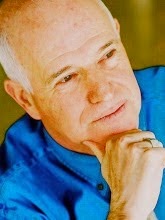
Michael Shenkman, president and founder of Arch of Leadership, Professional Leader Mentoring (www.leadermentoring.com), will be presenting two papers at the 20100 Mentoring Conference, sponsored by the Mentoring Institute at the University of New Mexico, and the International Mentoring Association on October 26, 2011.
In a morning workshop, Shenkman will discuss his own experiences in "Creating an Effective Mentoring Program."
In the afternoon Shenkman will introduce important concepts in mentoring the diversity of creative aspirations, mentoring that inspires people to take up roles such as leading, but also those of artist, mystic and prophet.
For information about the conference, contact Nora Dominguez: noradg@unm.edu
For information on Shenkman's talks, contact michael@leadermentoring.com
Sunday, September 4, 2011
Thoughts from the Arch of Leadership On Steve Jobs’ Departure
If a leader’s impact is measured by the sense of loss and disorientation his or her
departure evokes, then Steve Jobs is certainly a leader in my life. He has held that status for
me ever since I began this leader mentoring work in earnest 15 years ago. I preferred him as
a leader exemplar to his peer Bill Gates, whose Microsoft was riding high as Apple was still
struggling. Now, of course, the situation is reversed.
I remember vividly how, ten years ago, I was sitting in a living room in San Jose, CA,
in the heart of “Apple Country,” with a group of female Apple expatriates, who are now
major executives in other Silicon Valley companies. I was introducing the idea of leader
mentoring, and when I asked about Jobs as a leader, they universally derided his irascible
personality and abusive behaviors. Every one proclaimed her glee at being out of his
company. At this point Jobs had just returned to Apple and so the curtain had not yet risen
on his second act. I replied then that being a great leader is not necessarily the same as being
a likable person, and that creating followers to fulfill a vision sometimes meant acting in
unfriendly ways. No one was swayed.
I do not so much feel vindicated by what has happened since as much as I harbor the
suspicion that in his second act Jobs became a better leader. His irascibility didn’t go away.
But in terms used by the Arch of Leadership, I would say that in his first go round, when
these women experienced him, he was quite immature, and in his meteoric rise to stardom, he
had skipped over the most important developmental processes that take place in Arch One,
the Arch of “Effectiveness.” He had vaulted straight into being a leader of the type we
describe as being in the Arch of “Vision and Organization” (the second Arch), and didn’t
know how to handle it.
In leading as in life, skipping over developmental stages has its perils. In the second
arch one identifies one’s vision with the company and embodies its aspirations. The
young Jobs took
that as license to embody the organization’s success and ambitions. This was all hollow
for him, and it brought him down. He had never learned the lessons of Arch One or built
his Arch Two behaviors on that foundation. In Arch One he would have learned (1) to
connect the depth of his story to a leader’s path, (2) to understand how a leader’s brand
affects people’s lives, and (3) to fully appreciate the decisions people make when becoming
followers of a leader. For Jobs the price he paid for this skipped over development -- being
fired from his beloved company – was sent into exile.
I think he learned some important lessons about Arch One leading during that time in
the desert. His experiences with NeXT computer and Pixar brought him into immediate
proximity to great minds, whom he had to trust and follow. A vein of acceptance opened in
him, and he came to better (if not completely) appreciate how his brand created followers and
what value those followers brought to envisioning and accomplishing complex and
challenging endeavors.
In his Commencement address to Stanford in 2005 Jobs mentioned his brush with
death. His talk was entitled, “Stay Hungry, Stay Foolish.” It is worth hearing
(http://www.youtube.com/watch?v=D1R-jKKp3NA). The talk concentrated on how to stay
creative; and we all know Jobs is the very essence of “creative.” But I can’t help but feel, and
he never has said this, that his time in the desert, away from Apple, also made him aware of
the importance of followers who actually do the work that the very act of creating followers
makes for a more expansive and encompassing vision of our humanity. His acceptance of his
leader role and his growing appreciation of followers allowed him to forge a link between
vision and self-trust so that great, mortal energy could be unleashed throughout the
organization.
In other words, he grew up as a leader and learned to create followers in exactly the
terms we mean it in the context of Arch One: bring together creative, capable, energetic
people -- who could go anywhere, who have a surplus of choices at their disposal, but who
choose to be a follower of this person – and allow them collaborate on transforming
possibilities into realities on a large scale, affecting as many people’s lives as the vision and
the competence to implement it permits. This is how Apple, under Jobs’ leadership came to
vie with Exxon/Mobile as the world’s most valuable company.
Interestingly, unlike his peer Bill Gates, Jobs has not engaged in philanthropy and
Apple is not connected to any charity. This might seem cold or dismissive of our human and
social needs. But somehow it bespeaks of Jobs’ deep belief that the human endeavor needs
not just help and succor, but it also needs a drive solely and ardently dedicated to opening up
the human endeavor to a completely new vision of itself. That drive is his gift. That
dedication to giving to something so large as the improving way we do certain things in our
lives and making them more enjoyable is why Steve Jobs’ leading can be felt by someone as
remote from him as I am.
Still, from the perspective of the Arch, I also notice that there is no mention of a
mentor in his narrative. Despite his growth as a leader, deep down, at some level, I think he
feels that his vision alone is sufficient, and that communicating it only takes place in the
success of its products. To me, that signals a pathos that lurks in Steve Jobs, that keeps him
in the mode of being an iconic leader, and also keeps him somewhat a “prisoner” in his
astoundingly lofty creative tower. What might a mentor have imparted to Steve Jobs? “The
life of leading,” a mentor might have said, “embraces followers, and that this act, too, is
creative, maybe the most creative. Accept it, and celebrate.”
What might a mentor mean in your life? Do something that Steve Jobs may not have
done: work with a mentor. The Arch of Leadership makes it easy for you to do this by
providing programs and opportunities that are readily available to you, wherever you are
along the path. Visit www.leadermentoring.com and see just how unique a contribution a
mentor ca make in your life of leading.
departure evokes, then Steve Jobs is certainly a leader in my life. He has held that status for
me ever since I began this leader mentoring work in earnest 15 years ago. I preferred him as
a leader exemplar to his peer Bill Gates, whose Microsoft was riding high as Apple was still
struggling. Now, of course, the situation is reversed.
I remember vividly how, ten years ago, I was sitting in a living room in San Jose, CA,
in the heart of “Apple Country,” with a group of female Apple expatriates, who are now
major executives in other Silicon Valley companies. I was introducing the idea of leader
mentoring, and when I asked about Jobs as a leader, they universally derided his irascible
personality and abusive behaviors. Every one proclaimed her glee at being out of his
company. At this point Jobs had just returned to Apple and so the curtain had not yet risen
on his second act. I replied then that being a great leader is not necessarily the same as being
a likable person, and that creating followers to fulfill a vision sometimes meant acting in
unfriendly ways. No one was swayed.
I do not so much feel vindicated by what has happened since as much as I harbor the
suspicion that in his second act Jobs became a better leader. His irascibility didn’t go away.
But in terms used by the Arch of Leadership, I would say that in his first go round, when
these women experienced him, he was quite immature, and in his meteoric rise to stardom, he
had skipped over the most important developmental processes that take place in Arch One,
the Arch of “Effectiveness.” He had vaulted straight into being a leader of the type we
describe as being in the Arch of “Vision and Organization” (the second Arch), and didn’t
know how to handle it.
In leading as in life, skipping over developmental stages has its perils. In the second
arch one identifies one’s vision with the company and embodies its aspirations. The
young Jobs took
that as license to embody the organization’s success and ambitions. This was all hollow
for him, and it brought him down. He had never learned the lessons of Arch One or built
his Arch Two behaviors on that foundation. In Arch One he would have learned (1) to
connect the depth of his story to a leader’s path, (2) to understand how a leader’s brand
affects people’s lives, and (3) to fully appreciate the decisions people make when becoming
followers of a leader. For Jobs the price he paid for this skipped over development -- being
fired from his beloved company – was sent into exile.
I think he learned some important lessons about Arch One leading during that time in
the desert. His experiences with NeXT computer and Pixar brought him into immediate
proximity to great minds, whom he had to trust and follow. A vein of acceptance opened in
him, and he came to better (if not completely) appreciate how his brand created followers and
what value those followers brought to envisioning and accomplishing complex and
challenging endeavors.
In his Commencement address to Stanford in 2005 Jobs mentioned his brush with
death. His talk was entitled, “Stay Hungry, Stay Foolish.” It is worth hearing
(http://www.youtube.com/watch?v=D1R-jKKp3NA). The talk concentrated on how to stay
creative; and we all know Jobs is the very essence of “creative.” But I can’t help but feel, and
he never has said this, that his time in the desert, away from Apple, also made him aware of
the importance of followers who actually do the work that the very act of creating followers
makes for a more expansive and encompassing vision of our humanity. His acceptance of his
leader role and his growing appreciation of followers allowed him to forge a link between
vision and self-trust so that great, mortal energy could be unleashed throughout the
organization.
In other words, he grew up as a leader and learned to create followers in exactly the
terms we mean it in the context of Arch One: bring together creative, capable, energetic
people -- who could go anywhere, who have a surplus of choices at their disposal, but who
choose to be a follower of this person – and allow them collaborate on transforming
possibilities into realities on a large scale, affecting as many people’s lives as the vision and
the competence to implement it permits. This is how Apple, under Jobs’ leadership came to
vie with Exxon/Mobile as the world’s most valuable company.
Interestingly, unlike his peer Bill Gates, Jobs has not engaged in philanthropy and
Apple is not connected to any charity. This might seem cold or dismissive of our human and
social needs. But somehow it bespeaks of Jobs’ deep belief that the human endeavor needs
not just help and succor, but it also needs a drive solely and ardently dedicated to opening up
the human endeavor to a completely new vision of itself. That drive is his gift. That
dedication to giving to something so large as the improving way we do certain things in our
lives and making them more enjoyable is why Steve Jobs’ leading can be felt by someone as
remote from him as I am.
Still, from the perspective of the Arch, I also notice that there is no mention of a
mentor in his narrative. Despite his growth as a leader, deep down, at some level, I think he
feels that his vision alone is sufficient, and that communicating it only takes place in the
success of its products. To me, that signals a pathos that lurks in Steve Jobs, that keeps him
in the mode of being an iconic leader, and also keeps him somewhat a “prisoner” in his
astoundingly lofty creative tower. What might a mentor have imparted to Steve Jobs? “The
life of leading,” a mentor might have said, “embraces followers, and that this act, too, is
creative, maybe the most creative. Accept it, and celebrate.”
What might a mentor mean in your life? Do something that Steve Jobs may not have
done: work with a mentor. The Arch of Leadership makes it easy for you to do this by
providing programs and opportunities that are readily available to you, wherever you are
along the path. Visit www.leadermentoring.com and see just how unique a contribution a
mentor ca make in your life of leading.
Labels:
Arch of Leadership,
leader mentoring,
leadership,
Steve Jobs
Wednesday, June 15, 2011
Tom Friedman: People WANT Liberal Arts
In considering the last post, on the value of liberal arts for leaders, one might apply the "free market" ideology that says, liberal arts are under siege because students don't want them. Given the pathetic education many are subjected to prior to college (in a recent survey, only 17% of 12th graders could provide a name for a picture of the 16th president of the US: Abraham Lincoln!!!!), that is not surprising. It doesn't validate this ideology, but certainly puts on display one of its results.
That said, however, there is strong evidence that at least among some college students, liberal arts are desired.
I refer to today's (June 15, 2011) column by Tom Friedman in the New York Times. He cites world wide excitement for the classes (now available on line at www.JusticeHarvard.org) of Michael J. Sandel of Harvard. He is a teacher of political philosophy. People in the US, China and elsewhere, line up hours in advance to attend his lectures. Friedman goes on to say, "Sandel’s recent book — “Justice: What’s the Right Thing to Do?” — has sold more than a million copies in East Asia alone. This is a book about moral philosophy, folks!"
What is going on here? In Asia, at least, Friedman quotes enthusiasts who say Sandel's excursion into humanities and critical thinking offers antedotes to mechanistic, rote, technical learning. He cites these reasons for the course's popularity:
"One is the growth of online education, where students anywhere now can gain access to the best professors from everywhere. Another is the craving in Asia for a more creative, discussion-based style of teaching in order to produce more creative, innovative students. And the last is the hunger of young people to engage in moral reasoning and debates, rather than having their education confined to the dry technical aspects of economics, business or engineering."
That said, however, there is strong evidence that at least among some college students, liberal arts are desired.
I refer to today's (June 15, 2011) column by Tom Friedman in the New York Times. He cites world wide excitement for the classes (now available on line at www.JusticeHarvard.org) of Michael J. Sandel of Harvard. He is a teacher of political philosophy. People in the US, China and elsewhere, line up hours in advance to attend his lectures. Friedman goes on to say, "Sandel’s recent book — “Justice: What’s the Right Thing to Do?” — has sold more than a million copies in East Asia alone. This is a book about moral philosophy, folks!"
What is going on here? In Asia, at least, Friedman quotes enthusiasts who say Sandel's excursion into humanities and critical thinking offers antedotes to mechanistic, rote, technical learning. He cites these reasons for the course's popularity:
"One is the growth of online education, where students anywhere now can gain access to the best professors from everywhere. Another is the craving in Asia for a more creative, discussion-based style of teaching in order to produce more creative, innovative students. And the last is the hunger of young people to engage in moral reasoning and debates, rather than having their education confined to the dry technical aspects of economics, business or engineering."
Friedman concludes the article by quoting Sandel:
“Students everywhere are hungry for discussion of the big ethical questions we confront in our everyday lives,” Sandel argues. “In recent years, seemingly technical economic questions have crowded out questions of justice and the common good. I think there is a growing sense, in many societies, that G.D.P. and market values do not by themselves produce happiness, or a good society."
Amen.
I guess what bothers me is that this notion expresses a minority opinion, at least as reflected in the actual decisions so-called "educators" (or panderers) make in terms of educational priorities and material resources.
Anyway, it is synchronicity at its best when such confirmation arrives so soon after venturing a thought.
Tuesday, June 14, 2011
THE HIDDEN VALUE OF LIBERAL ARTS: NURTURING OUR ASPIRING LEADERS
“Education is not the filling of a pail, but the lighting of a fire.”
W.B. Yeats
I recently addressed an audience of faculty, students, administrators and guests from my alma mater, Dickinson College, in Carlisle, PA. The substance of my talk centered on the idea that a liberal arts education informs, guides and deepens a leader’s aspirations.
In the meantime, the value of a college education is being challenged. In all the conversations on the subject, the notion that a liberal arts education nurtures our leaders’ aspirations does not even show up.
Take, for example, an article by Louis Menand, in the June 6, 2011 issue of The New Yorker.
He cites three “theories” for investing in a college education:
(1) gain qualifications to enter into elite professions;
(2) provide people with “norms of reason and taste,” in order to provide social coherence; and
(3) learn the specialized skills needed in advanced economies.
These reasons refer exclusively to the economic value of a college education, as providing a means to increase earning power. Most theories about the value of a college education take these tracks. There is a fourth theory out there, voiced meekly and almost apologetically, which rhapsodizes about the humanizing value of a liberal arts education. This theory mitigates the downside of the economic value theories by elevating the opportunity for a better quality of life over the earnings one accumulates in a lifetime.
My proposal adds a fifth theory to the mix: a liberal arts education (in particular) provides graduates who envision taking on roles as leaders with the tools to enrich, cultivate, sustain and promote their aspirations.
Aspirations are things of air: they are not designated in career paths; professions do not certify them; and they are not guaranteed by trends. Aspirations break through given circumstances and strive to offer people something more expansive and more encompassing than existing social and economic, or technological and institutional arrangements provide.
To act on their aspirations, leaders come to rely on very substantial, deep and well-grounded skills of character and self-trust. To fulfill those aspirations requires a commitment of steel, to be sure; but it also requires envisioning wider worlds, and then envisioning a reasoned, sensible, grounded narrative if those aspirations are to be realized. And leaders also need to learn how to recover, reset and start again when they fail. To be sure, such aspirations do not require a liberal arts education, but, I would argue, such an education greatly increases the likelihood that a life of leading will not collapse into cynicism, despair or paralysis.
How so?
A liberal arts education provides aspiring leaders with key resources. Among these are:
(1) a breadth of knowledge that spans different discourses, cultures and different fields of endeavor, so that a vision of their cross-fertilization is possible – a basic requirement for organizations operating in complex economies;
(2) a sense of the depth of commitment needed to bring a great idea to fruition – this we learn from accounts of all the great struggles that other leaders have endured;
(3) a profound sense of being able to learn what needs to be learned in order to meet high standards and exacting goals; and
(4) a deep source of recourse for refreshment, revitalization and restoration that will be needed when leaders confront inevitable failures and setbacks, and when the world changes beyond recognition, seemingly instantaneously.
When looked at from this perspective, the standard theories only account for the most superficial of “economic values,” and do not even glimpse the underlying and most essential value of all: nurturing the aspirations of leaders.
We do indeed have a crisis in education. But the real crisis for me consists of not seeing what it takes to prepare the myriad leaders we need in every nook and cranny of our complex world. The crisis consists of neglecting the unimpeachable, irredeemable value of studying, learning and reflecting on the great figures of humanity -- exactly what a liberal arts education demands. This deficit starts accumulating long before a student goes off to college. It starts with the reduction of early education to the mechanics of teaching to the test.
By devaluing what the liberal arts offer – science and math, but also history and literature and philosophy and critical thinking -- we are asking our future leaders to proceed blindly into the complex, multi-faceted, highly international and financially integrated world they aspire to change. It is not that a liberal arts education is the only way to nurture and sustain a leader’s aspirations; but it is the best way we have come up with so far.
Are we so willing to be blinded by all that glitters that we completely miss our most important asset: the leader’s aspiration? What else, besides those aspirations and the hard work they impose, builds our shared future? How much is educating, enriching and nurturing those aspirations worth? How much does neglecting that education cost?
What are your thoughts about the value of a liberal arts education? If you are a leader who has this experience, what has it meant to you? Maybe you could offer some words of encouragement to parents who are concerned about the costs or students who are concerned about their income prospects.
Place your comments on the blog: leaderpathways.blogspot.com, or on the Leader Mentoring Facebook page.
“Education is not the filling of a pail, but the lighting of a fire.”
W.B. Yeats
I recently addressed an audience of faculty, students, administrators and guests from my alma mater, Dickinson College, in Carlisle, PA. The substance of my talk centered on the idea that a liberal arts education informs, guides and deepens a leader’s aspirations.
In the meantime, the value of a college education is being challenged. In all the conversations on the subject, the notion that a liberal arts education nurtures our leaders’ aspirations does not even show up.
Take, for example, an article by Louis Menand, in the June 6, 2011 issue of The New Yorker.
He cites three “theories” for investing in a college education:
(1) gain qualifications to enter into elite professions;
(2) provide people with “norms of reason and taste,” in order to provide social coherence; and
(3) learn the specialized skills needed in advanced economies.
These reasons refer exclusively to the economic value of a college education, as providing a means to increase earning power. Most theories about the value of a college education take these tracks. There is a fourth theory out there, voiced meekly and almost apologetically, which rhapsodizes about the humanizing value of a liberal arts education. This theory mitigates the downside of the economic value theories by elevating the opportunity for a better quality of life over the earnings one accumulates in a lifetime.
My proposal adds a fifth theory to the mix: a liberal arts education (in particular) provides graduates who envision taking on roles as leaders with the tools to enrich, cultivate, sustain and promote their aspirations.
Aspirations are things of air: they are not designated in career paths; professions do not certify them; and they are not guaranteed by trends. Aspirations break through given circumstances and strive to offer people something more expansive and more encompassing than existing social and economic, or technological and institutional arrangements provide.
To act on their aspirations, leaders come to rely on very substantial, deep and well-grounded skills of character and self-trust. To fulfill those aspirations requires a commitment of steel, to be sure; but it also requires envisioning wider worlds, and then envisioning a reasoned, sensible, grounded narrative if those aspirations are to be realized. And leaders also need to learn how to recover, reset and start again when they fail. To be sure, such aspirations do not require a liberal arts education, but, I would argue, such an education greatly increases the likelihood that a life of leading will not collapse into cynicism, despair or paralysis.
How so?
A liberal arts education provides aspiring leaders with key resources. Among these are:
(1) a breadth of knowledge that spans different discourses, cultures and different fields of endeavor, so that a vision of their cross-fertilization is possible – a basic requirement for organizations operating in complex economies;
(2) a sense of the depth of commitment needed to bring a great idea to fruition – this we learn from accounts of all the great struggles that other leaders have endured;
(3) a profound sense of being able to learn what needs to be learned in order to meet high standards and exacting goals; and
(4) a deep source of recourse for refreshment, revitalization and restoration that will be needed when leaders confront inevitable failures and setbacks, and when the world changes beyond recognition, seemingly instantaneously.
When looked at from this perspective, the standard theories only account for the most superficial of “economic values,” and do not even glimpse the underlying and most essential value of all: nurturing the aspirations of leaders.
We do indeed have a crisis in education. But the real crisis for me consists of not seeing what it takes to prepare the myriad leaders we need in every nook and cranny of our complex world. The crisis consists of neglecting the unimpeachable, irredeemable value of studying, learning and reflecting on the great figures of humanity -- exactly what a liberal arts education demands. This deficit starts accumulating long before a student goes off to college. It starts with the reduction of early education to the mechanics of teaching to the test.
By devaluing what the liberal arts offer – science and math, but also history and literature and philosophy and critical thinking -- we are asking our future leaders to proceed blindly into the complex, multi-faceted, highly international and financially integrated world they aspire to change. It is not that a liberal arts education is the only way to nurture and sustain a leader’s aspirations; but it is the best way we have come up with so far.
Are we so willing to be blinded by all that glitters that we completely miss our most important asset: the leader’s aspiration? What else, besides those aspirations and the hard work they impose, builds our shared future? How much is educating, enriching and nurturing those aspirations worth? How much does neglecting that education cost?
What are your thoughts about the value of a liberal arts education? If you are a leader who has this experience, what has it meant to you? Maybe you could offer some words of encouragement to parents who are concerned about the costs or students who are concerned about their income prospects.
Place your comments on the blog: leaderpathways.blogspot.com, or on the Leader Mentoring Facebook page.
Thursday, February 24, 2011
Leader Mentoring: A Different Conversation
For both mentors and mentees, entering an Arch of Leadership leader mentoring
engagement for the first time can be disorienting. The people in our program are there
because they care about leading, have succeeded in leading, or want to succeed. But when at
the table, in their conversation, neither mentor nor mentee is a leader. Mentoring is a
different kind of conversation – for both parties. A short list of comparisons between the
roles of leaders and mentors shows how different the two processes are.
1. Leaders are expert in forming collaborations that accomplish goals successfully.
Mentors tend to aspirations. These delicate states of being need to be coaxed into
clarity, nurtured with reflection, recollection and self-trust, and need to survive beyond any
limited goal.
2. Leaders must act with resolve, in the heat and complexity of the immediate
situation.
Mentors must cultivate in the mentee an awareness of the kinds of feelings,
spiritedness and resolve that leaders need in their hearts and souls, if any goal of merit and
significance is going to be reached.
3. Leaders have their own goals to put into practice.
Mentors have only the mentee’s aspirations at heart. If a mentor approaches the
conversation with the same intense focus as a leader on meeting a goal, the mentoring bond
will be broken.
For these reasons and others, confusing leading and mentoring can place the
conversation at cross-purposes, and dilute the outcomes for both participants. While informal
mentors who are cultivating new leaders are apt to make this mistake, the professional,
trained Arch of Leadership mentors do not.
The confusion runs two ways. Leaders might think they are mentoring to make the
mentee like them. No. Many people who approach us to be mentors feel qualified for this
work because of their track record in successfully solving practical problems. They are
surprised to find that Arch of Leadership mentors bring success to the table, but they also
bring more to the engagement. Mentees can get confused as well. Some might think: “This
mentor sitting across the table from me is worthy of my respect, and she is taking the time to
listen to me, but won’t give me advice or clues as to how to solve my problems or meet my
deadlines and goals.”
Mentors who have been successful leaders would love to offer their two cents’ worth
on solving that problem, but to be successful mentors they must put aside their desire to
dispense advice. Instead of thinking about solutions to problems, mentors sense, identify and
reinforce the qualities mentees can call upon within themselves in order to survive and even
thrive in the challenging life they have chosen, the life of leading. The mentor then lays out
what the mentee can anticipate by taking up the life of leading (long after the immediate
problem is passed). The mentor senses the mentee’s attitude about life, and judges whether or
not that person is willing postpone or even sacrifice some ambitions in order to engage in
something more expansive and more encompassing. Finally, the mentor tests whether or not
the mentee has, exerts and nurtures the energy necessary in this life.
For a successful mentoring engagement, both mentor and mentee must resist the siren
call to fix problems. Success in the mentoring conversation happens when the anxieties,
pressures and pitfalls of everyday leading are put aside, by both mentor and mentee; when
daily “doing” is deprived of its power to enthrall and overwhelm; when the mentor forgets
his sense of accomplishment and the mentee lets go of that crushing sense of urgency.
Mentoring takes a step back from the front line for a moment. Together, mentor and
mentee realize this: because mentoring allows aspiration to rise to the fore in a clear,
informed and definitive way, leading happens.
Contact us to see how the professional mentors at the Arch of Leadership can
transform your aspirations into a commitment to the life of leading.
engagement for the first time can be disorienting. The people in our program are there
because they care about leading, have succeeded in leading, or want to succeed. But when at
the table, in their conversation, neither mentor nor mentee is a leader. Mentoring is a
different kind of conversation – for both parties. A short list of comparisons between the
roles of leaders and mentors shows how different the two processes are.
1. Leaders are expert in forming collaborations that accomplish goals successfully.
Mentors tend to aspirations. These delicate states of being need to be coaxed into
clarity, nurtured with reflection, recollection and self-trust, and need to survive beyond any
limited goal.
2. Leaders must act with resolve, in the heat and complexity of the immediate
situation.
Mentors must cultivate in the mentee an awareness of the kinds of feelings,
spiritedness and resolve that leaders need in their hearts and souls, if any goal of merit and
significance is going to be reached.
3. Leaders have their own goals to put into practice.
Mentors have only the mentee’s aspirations at heart. If a mentor approaches the
conversation with the same intense focus as a leader on meeting a goal, the mentoring bond
will be broken.
For these reasons and others, confusing leading and mentoring can place the
conversation at cross-purposes, and dilute the outcomes for both participants. While informal
mentors who are cultivating new leaders are apt to make this mistake, the professional,
trained Arch of Leadership mentors do not.
The confusion runs two ways. Leaders might think they are mentoring to make the
mentee like them. No. Many people who approach us to be mentors feel qualified for this
work because of their track record in successfully solving practical problems. They are
surprised to find that Arch of Leadership mentors bring success to the table, but they also
bring more to the engagement. Mentees can get confused as well. Some might think: “This
mentor sitting across the table from me is worthy of my respect, and she is taking the time to
listen to me, but won’t give me advice or clues as to how to solve my problems or meet my
deadlines and goals.”
Mentors who have been successful leaders would love to offer their two cents’ worth
on solving that problem, but to be successful mentors they must put aside their desire to
dispense advice. Instead of thinking about solutions to problems, mentors sense, identify and
reinforce the qualities mentees can call upon within themselves in order to survive and even
thrive in the challenging life they have chosen, the life of leading. The mentor then lays out
what the mentee can anticipate by taking up the life of leading (long after the immediate
problem is passed). The mentor senses the mentee’s attitude about life, and judges whether or
not that person is willing postpone or even sacrifice some ambitions in order to engage in
something more expansive and more encompassing. Finally, the mentor tests whether or not
the mentee has, exerts and nurtures the energy necessary in this life.
For a successful mentoring engagement, both mentor and mentee must resist the siren
call to fix problems. Success in the mentoring conversation happens when the anxieties,
pressures and pitfalls of everyday leading are put aside, by both mentor and mentee; when
daily “doing” is deprived of its power to enthrall and overwhelm; when the mentor forgets
his sense of accomplishment and the mentee lets go of that crushing sense of urgency.
Mentoring takes a step back from the front line for a moment. Together, mentor and
mentee realize this: because mentoring allows aspiration to rise to the fore in a clear,
informed and definitive way, leading happens.
Contact us to see how the professional mentors at the Arch of Leadership can
transform your aspirations into a commitment to the life of leading.
Tuesday, January 18, 2011
Creative Leaders Need Not Apply
A friend of mine and Arch of Leadership mentor sent me an article (from the Boston Globe, by Kevin Lewis, January 16, 2011) that summarized the findings from a study about to be published in the Journal of Experimental Social Psychology: (Go to: Creative Leaders Need Not Apply -- my title) "Those who were perceived to be more creative were perceive to have lower leadership potential.... Organizations may face a bias agains selecting the most creative individuals as leaders in favor of selecting leaders who would preserve the status quo by sticking with feasible but relatively unoriginal solutions."
Does that surprise you? It doesn't surprise me.
Why do we mentor leaders? To many it may seem that these people are blessed, the fortunate ones, the ones who made it. Aren't we just picking out and skimming off the cream for our attentions? Our answer is emphatically NO.
Leaders worthy of the name risk their careers and positions every day in order to transform visions of what is possible into real products, services and organizations that offer more expansive and more encompassing possibilities for others. They are often shot down, as this article makes clear; they often fail, as I have said in other articles (See, for instance: "Sincere Failures"). These creative leaders aren't often the "stars" who are hand-picked for succession. These are the people who are driven by their excitement for a new way, by their disturbing concerns that demand new approaches, and in order to act on these, make themselves vulnerable to the whims and judgments of others, most of whom have the status quo and shareholder dividends in mind.
The people we mentor are those who have tasted exactly what this article describes and instead of knuckling under have decided to lead others in order to make their living worthwhile and their efforts a matter of giving something and contributing something to the larger world.
My heart breaks to hear my own perceptions validated on such a large scale that it warrants publication in a major research journal. I feel for the way these creative people's spirits are wounded; I feel for the loss of initiative and vision that organizations perpetuate.
Our mentoring is intended to support the creative spirit in our leaders. By helping them discover the roots of their self-trust (see the blog post, "The King's Speech," for instance), we want to help these people find their voice. Our mentoring helps these people to see that their resolve to lead is important and does mean something to those around them. We help these aspiring souls crystalize a leader brand that inspires others take on something great -- whatever the risks.
So despite the discouraging scene this study validates, I am eternally grateful and personally and professionally enriched every day that I meet with those leaders who refuse rejection and take up that sacred mission of making the world more expansive, more encompassing, more alive, for us, for others, for the earth.
Does that surprise you? It doesn't surprise me.
Why do we mentor leaders? To many it may seem that these people are blessed, the fortunate ones, the ones who made it. Aren't we just picking out and skimming off the cream for our attentions? Our answer is emphatically NO.
Leaders worthy of the name risk their careers and positions every day in order to transform visions of what is possible into real products, services and organizations that offer more expansive and more encompassing possibilities for others. They are often shot down, as this article makes clear; they often fail, as I have said in other articles (See, for instance: "Sincere Failures"). These creative leaders aren't often the "stars" who are hand-picked for succession. These are the people who are driven by their excitement for a new way, by their disturbing concerns that demand new approaches, and in order to act on these, make themselves vulnerable to the whims and judgments of others, most of whom have the status quo and shareholder dividends in mind.
The people we mentor are those who have tasted exactly what this article describes and instead of knuckling under have decided to lead others in order to make their living worthwhile and their efforts a matter of giving something and contributing something to the larger world.
My heart breaks to hear my own perceptions validated on such a large scale that it warrants publication in a major research journal. I feel for the way these creative people's spirits are wounded; I feel for the loss of initiative and vision that organizations perpetuate.
Our mentoring is intended to support the creative spirit in our leaders. By helping them discover the roots of their self-trust (see the blog post, "The King's Speech," for instance), we want to help these people find their voice. Our mentoring helps these people to see that their resolve to lead is important and does mean something to those around them. We help these aspiring souls crystalize a leader brand that inspires others take on something great -- whatever the risks.
So despite the discouraging scene this study validates, I am eternally grateful and personally and professionally enriched every day that I meet with those leaders who refuse rejection and take up that sacred mission of making the world more expansive, more encompassing, more alive, for us, for others, for the earth.
Monday, January 17, 2011
"The King's Speech," a MUST See.
Self-Trust is the sine-qua-non of leading.
We describe it as a state of resolve in which a leader, relying on recollections of experience, values and aspirations, encourages followers to take that next worthy step, accept what has been accomplished thereby, and learn from it.
This movie may seem to be about George VI's stuttering, but it is about self-trust, most of all, and the role of mentoring in helping someone attain that state.
George VI's stuttering, the film reveals, relates to a childhood devoid of loving care, encouragement and hopefulness, and filled instead with pain, derision and repression. Sounds very British!!! Just kidding.
The king could not move beyond his faltering speech until he 1.) accepted that someone was worth spending time with; 2.) accepting that this person cared about him; and 3.) that he had to delve into his recollections of how he became a person who stuttered in order to take up a position of self-trust that no longer required that tripping hesitation.
In the case of the king, the physical presence and urging (coaching) of the mentor was essential. Self-trust for the king meant that out of the blue, someone who was completely different than him saw him as worthy, courageous and kingly.
Most of us do not have to get to that haughty level of acceptance, but we do struggle to accept our worthiness anyway. The din of criticisms (You don't have to live the life of that 5-year-old," Lionell the mentor said to Berty) from our childhoods, the wounds of fresh failures, the wilting glares of the skeptical make self-trust a difficult enough attitude to attain. But self-trust does not entail perfection, and when leading bold endeavors, it cannot. Taking that one step, up to the microphone, or into that next risky task is far enough. And including the hesitations and doubts and fears in that stepping out is part of it all.
Then, self-trust asks that we learn from what has transpired -- not just the mistakes (as though that will be all that happens), but from the successes as well. Those successes pave the way for the next step, and the next, and by learning from them we can impart some sense of the expansiveness of what we can bring to this life for others, for our communities and for the earth.
Long live self-trusting leaders.
See this move, "The King's Speech."
We describe it as a state of resolve in which a leader, relying on recollections of experience, values and aspirations, encourages followers to take that next worthy step, accept what has been accomplished thereby, and learn from it.
This movie may seem to be about George VI's stuttering, but it is about self-trust, most of all, and the role of mentoring in helping someone attain that state.
George VI's stuttering, the film reveals, relates to a childhood devoid of loving care, encouragement and hopefulness, and filled instead with pain, derision and repression. Sounds very British!!! Just kidding.
The king could not move beyond his faltering speech until he 1.) accepted that someone was worth spending time with; 2.) accepting that this person cared about him; and 3.) that he had to delve into his recollections of how he became a person who stuttered in order to take up a position of self-trust that no longer required that tripping hesitation.
In the case of the king, the physical presence and urging (coaching) of the mentor was essential. Self-trust for the king meant that out of the blue, someone who was completely different than him saw him as worthy, courageous and kingly.
Most of us do not have to get to that haughty level of acceptance, but we do struggle to accept our worthiness anyway. The din of criticisms (You don't have to live the life of that 5-year-old," Lionell the mentor said to Berty) from our childhoods, the wounds of fresh failures, the wilting glares of the skeptical make self-trust a difficult enough attitude to attain. But self-trust does not entail perfection, and when leading bold endeavors, it cannot. Taking that one step, up to the microphone, or into that next risky task is far enough. And including the hesitations and doubts and fears in that stepping out is part of it all.
Then, self-trust asks that we learn from what has transpired -- not just the mistakes (as though that will be all that happens), but from the successes as well. Those successes pave the way for the next step, and the next, and by learning from them we can impart some sense of the expansiveness of what we can bring to this life for others, for our communities and for the earth.
Long live self-trusting leaders.
See this move, "The King's Speech."
Subscribe to:
Posts (Atom)